

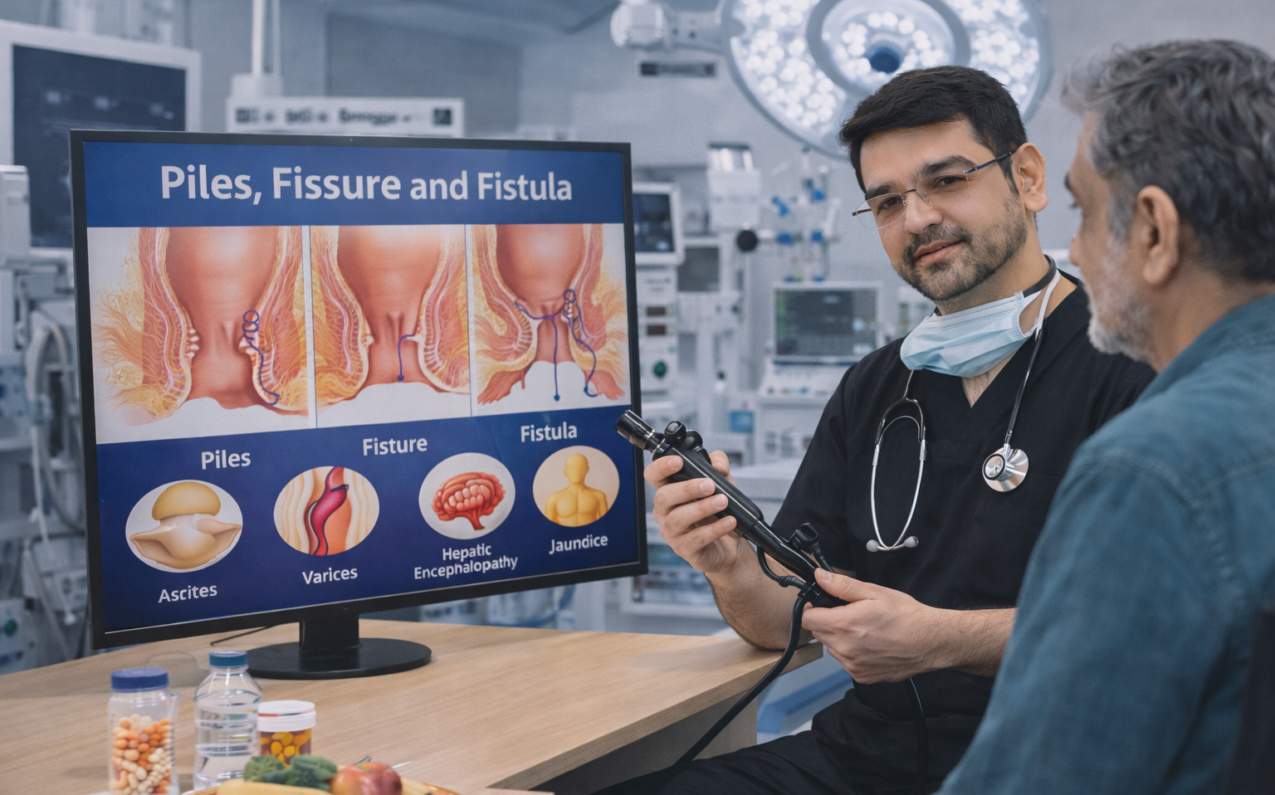
Piles, fissures, and fistulas are common anorectal conditions causing pain, bleeding, and discomfort during bowel movements. Many patients delay consultation due to hesitation, worsening complications. Early evaluation by a gastroenterologist ensures accurate diagnosis, effective treatment, and prevention of recurrence through structured intestinal and anorectal care.
Understanding Causes, Symptoms, and Modern Treatment Options
These anorectal disorders often develop due to chronic constipation, straining, prolonged sitting, pregnancy, or low-fiber diet. Piles involve swollen rectal veins, fissures are painful anal tears, and fistulas are abnormal tracts between the anal canal and skin. Modern management includes medication, lifestyle correction, minimally invasive procedures, and advanced surgical interventions when necessary, ensuring faster recovery and long-term relief.
What Are Piles, Fissure, and Fistula?
Piles (hemorrhoids) are enlarged blood vessels in the rectal area that may cause bleeding or swelling. Anal fissure is a small tear causing sharp pain during stool passage. Anal fistula forms due to infected glands leading to pus discharge. Accurate differentiation through clinical examination is essential for targeted treatment.
Common Symptoms and Warning Signs
Symptoms include rectal bleeding, painful bowel movements, itching, swelling near the anus, pus discharge, and persistent discomfort while sitting. Ignoring early signs may lead to infection or chronic complications. Prompt medical consultation prevents worsening and reduces need for extensive surgical treatment.
Diagnosis and Treatment Approach
Diagnosis is based on physical examination, proctoscopy, and occasionally imaging studies. Treatment ranges from dietary fiber therapy, stool softeners, topical medications, and pain relief to advanced procedures such as banding, laser therapy, or fistula surgery. Individualized treatment ensures safe and effective recovery.
“Most anorectal disorders are highly treatable when addressed early, and patient education plays a central role in preventing recurrence.”
Dr. Steven Wexner
Prevention and Long-Term Care
High-fiber diet, adequate hydration, regular exercise, and avoiding prolonged straining help prevent recurrence. Early treatment of constipation is crucial. Structured follow-up with a specialist ensures complete healing and reduces risk of chronic anorectal disease. schedule.